
The Limits of Empathy
David Byrd observed and drew psychiatric patients at Veterans Administration Medical Hospital in Montrose, NY while working as a nurse’s assistant for three decades. What is possible to see in Byrd’s imagery? Is seeing adequate to describe what I can know through his hand? What did Byrd feel as patients, often in distress, appear to us in stark scenarios? A man presses hands to his head, shoulders tense, legs stretched and twisted; one howls like a revenant flung wildly down a set of stairs; another tilts his head back dizzily, rivulets of tears pouring from blank eyes as a woman tips medication into his mouth; yet another grimaces, eyes closed, head tilted as he extends his arms to their limits, hands brittle and broken at the ends (figs. 1-4).
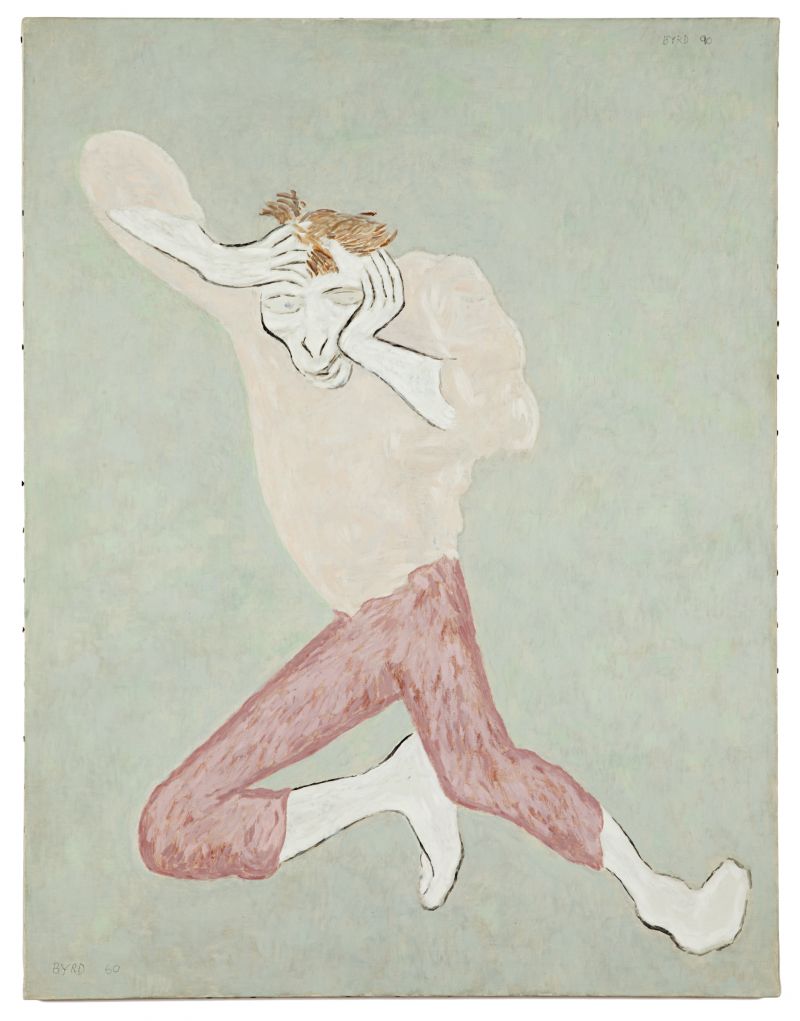
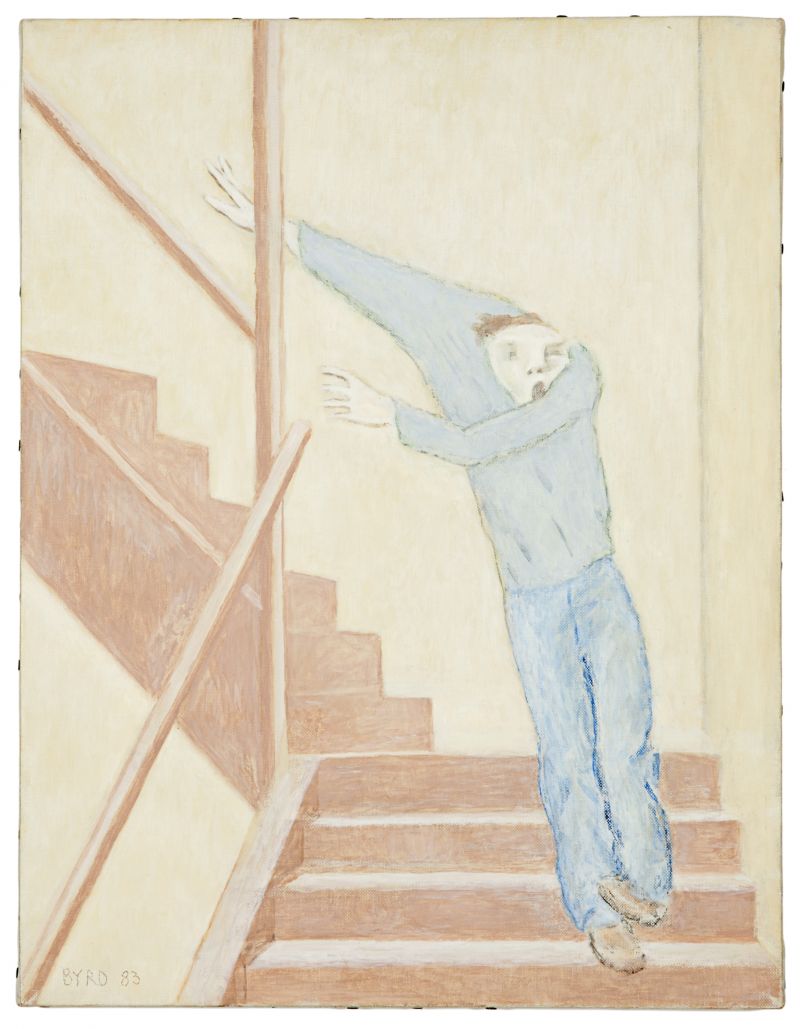
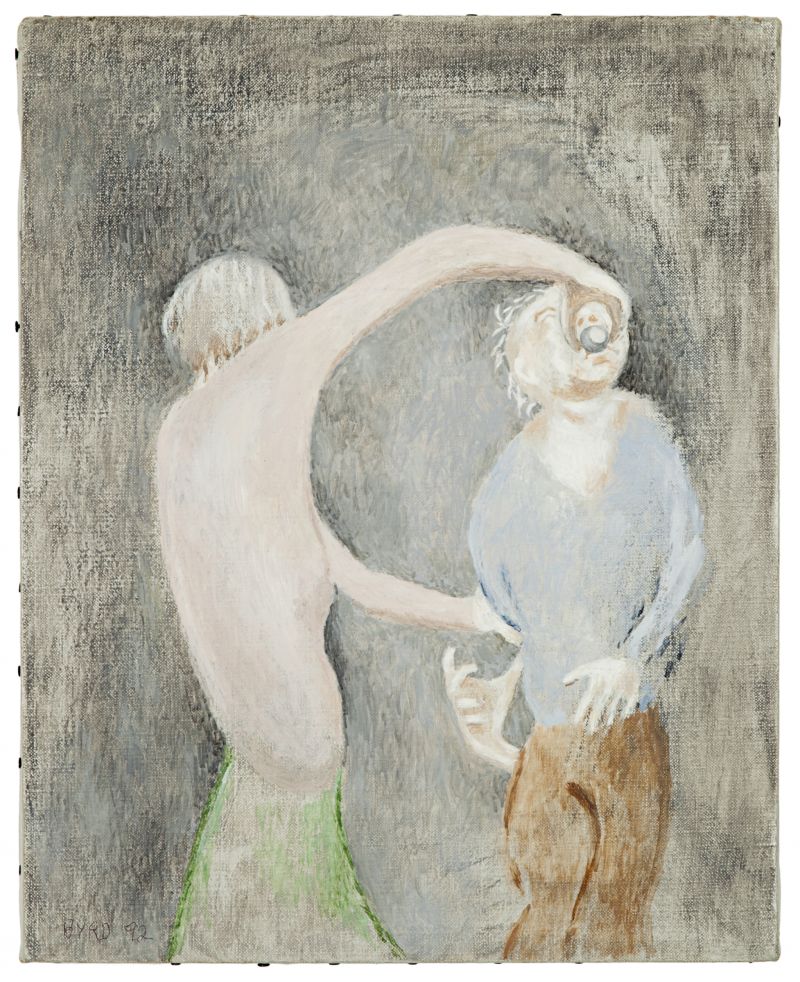
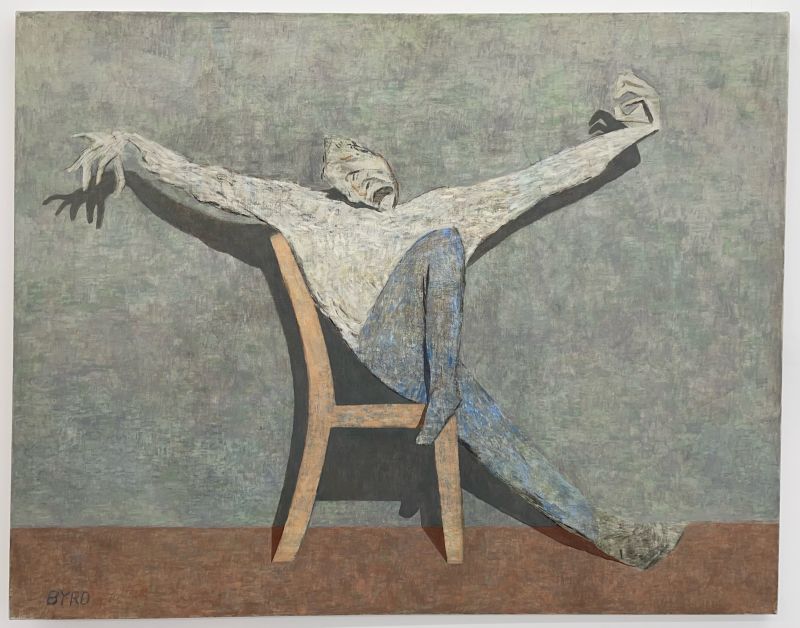
Can pictures adequately reveal how Byrd witnessed mental illness as a lived reality? Is that what he aimed to convey as an artist? Can any viewer – could Byrd himself -- adequately grasp what these patients experienced? Byrd believed that the pictures could give others a better understanding of the “human condition” as played out in “a place halfway between medical hospital and prison.”i That description resounds with me, having visited my mother several times under psychiatric care for illnesses variously diagnosed as schizophrenia and bi-polar disorder. I know what I felt in those spaces as a visitor. She described them using language similar to Byrd’s, a limbo, neither care facility or detention, a place made more menacing because it would not reveal its true identity.
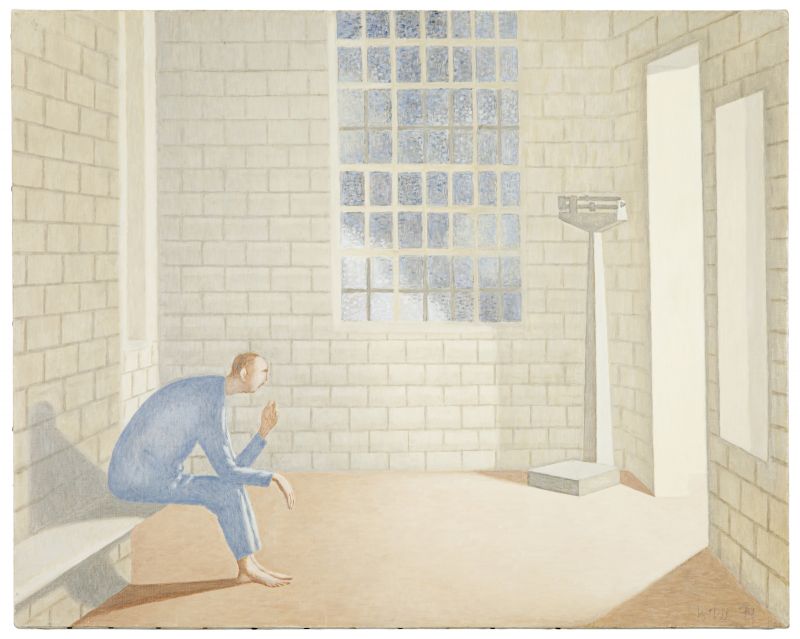
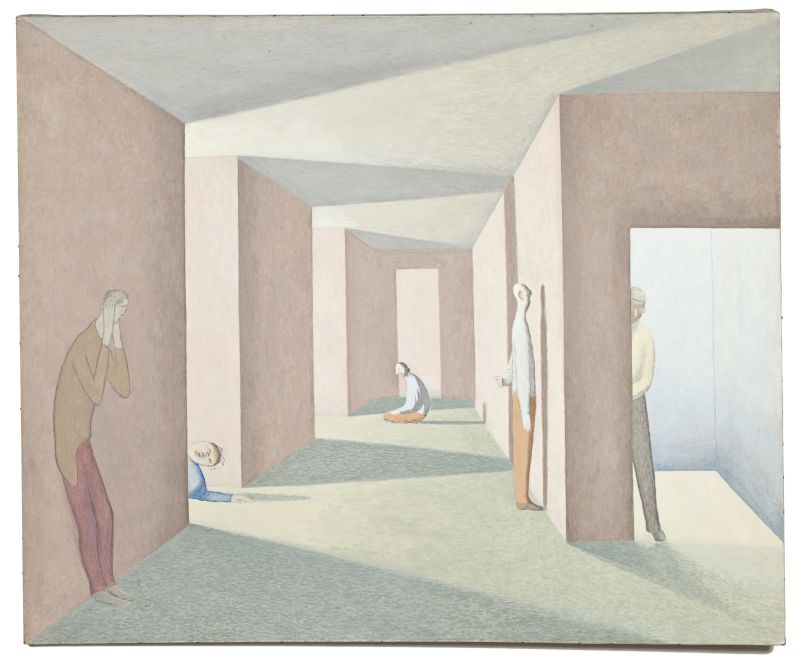
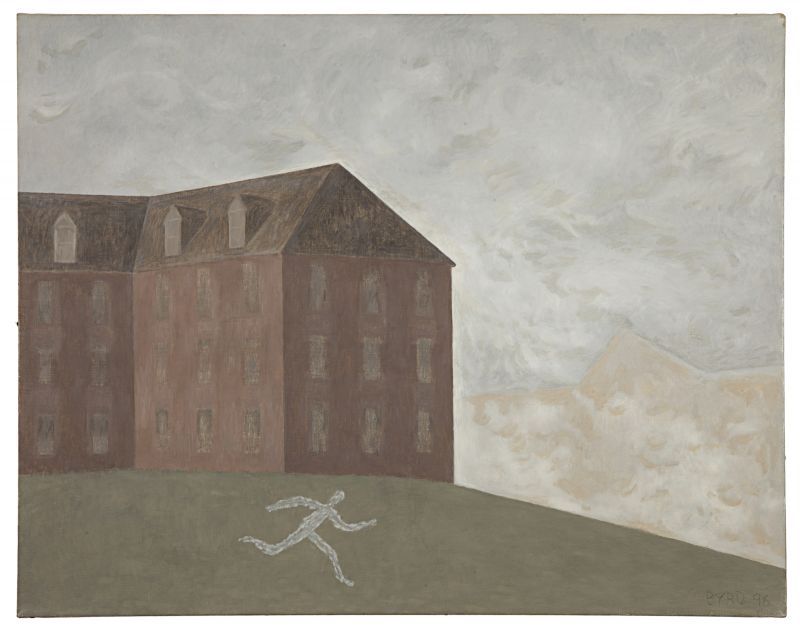
Man with Mirror (fig. 5) illuminates that liminal purgatory. A man sits on a shallow ledge in a cold sparse room. Hunched over and dressed in a matching blue shirt and pants, his bare feet rest flatly against the floor. A monotonous rhythm of brick and block glass windows compress him into the composition. He watches the empty entranceway as if expecting someone. The mirror hung opposite him reflects emptiness. A scale to the left of the entranceway suggests that a nurse might soon arrive. It provides a way to measure what is left of the man dwindling away in this cell. Hospital Hallways (fig.6) also captures a feeling of no place, space without exits, which serves to contain, control, and direct. It numbs and drains patients, as they can do little more than stand staring, lost and inactive, or get low to the floor. What then is Patient’s Dream (fig. 7) but a prison break fantasy?
In letters Byrd wrote to interest the world in his book project (posthumously realized), he says that working at the hospital “was interesting, unusual, upsetting sometimes poignant and with a little bit of risk also.” ii He made hundreds of drawings while on duty. What was at stake in depicting psychiatric patients? I imagine Byrd seated in a room at a distance from those under treatment and in various degrees of distress, furtively sketching, capturing facial expressions, and body language. He had access to patients at their most vulnerable, day in and day out, for thirty years. This provided him with perpetually available models, their bodies an ever-changing range of responses to emotional health and medication. Close, long-term proximity to mentally ill veterans must have also been emotionally taxing. Byrd witnessed extremes on his ward, troubling and confusing, raw and unpredictable. Although he claimed that mostly his job was uneventful, anecdotes from his VA Hospital book show that he was alert to a thin edge between unusual behavior and violence. In one case a patient moved around the ward naked, which he commemorated in a painting (fig. 8). Byrd recalls, “Don’t know why he had no clothes on. He did not lack them. Why nudity anyhow? Health enthusiasts? Born again? Attention? Disobedience? Hostility? Thought that it is rebellious. Anything to shock. Pull up woman’s skirts if they wore dresses. And though he looked pitiful he would hit you sometimes if you got close. It seemed enjoyable to him but he didn’t say so. Didn’t say anything. The rest of the patients were watching TV.”iii
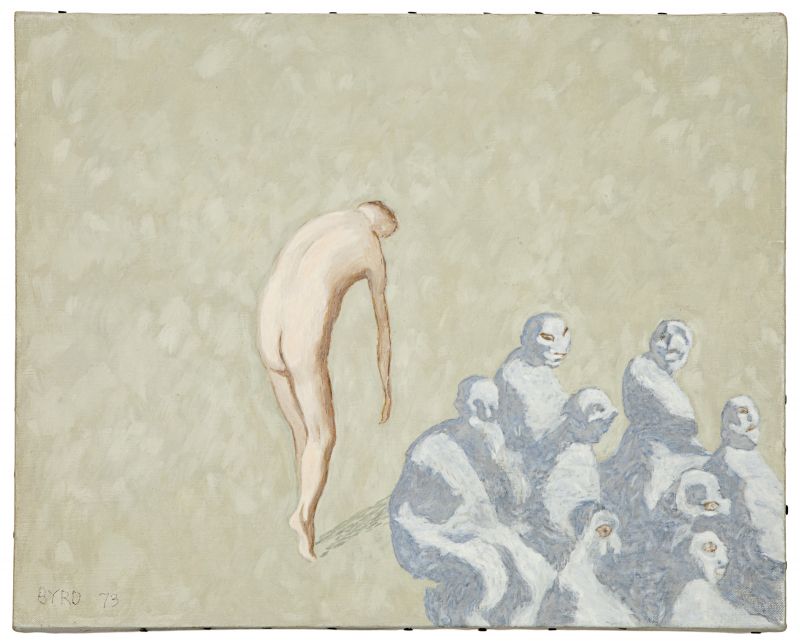
When Byrd says that drawing carried risk, he may have meant that as an artist, scenarios like this one fascinated him, but his job required attention to volatile situations that could spiral out of control, potentially harming co-workers and patients. The other aspect of risk had to do with consent. What authority did David Byrd have to depict these vulnerable men? What right do we have to look at the results? Drawing under these conditions was an ethical leap that risked the danger of patients becoming angry that Byrd was looking too long while rendering their images. As he contemplated publishing this work, Byrd wondered, “Though nothing criminal is taking place can an employee or patient claim it is them in a painting and they are insulted and are going to court? Does one have to wait till after death to be safe about showing a real person and even then maybe not?”iv Despite these legal concerns over privacy issues, Byrd’s art and life were entangled with psychiatric patients at the veteran’s hospital. Processing what he saw filled a need, otherwise he wouldn’t have made it his primary subject matter for several decades.
According to Byrd, his parents struggled with mental illness. He and his siblings had a rough childhood. His brother Carlyle committed suicide as an adult.v How did this trauma affect Byrd? Did he suffer from mental illness? That is not possible for us to ascertain. But I wonder, from reading his writings and looking at the work, whether he identified with the patients, recognizing a thin line between them. Did being there blur it? He notes, “What is common in a mental hospital is not so common outside and offends,” suggesting there are ways of acting that might be liberating yet ostracized by an uptight or unempathetic society. “OF COURSE PATIENTS COULD ASK WHERE DID THEY GET THE STAFF FROM,” Byrd notes, suggesting that so-called functional behavior might truly be contextual, and that patients recognized pathological symptoms in their caregivers.vi
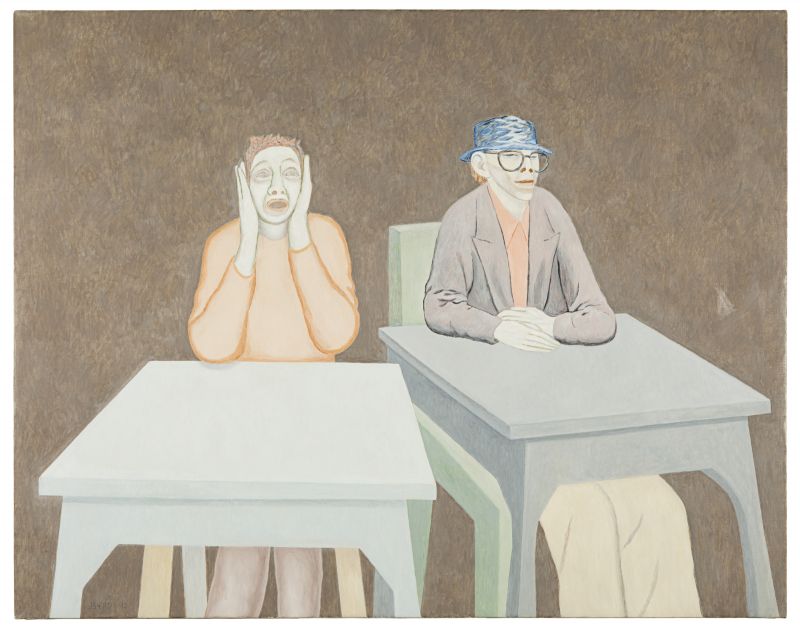
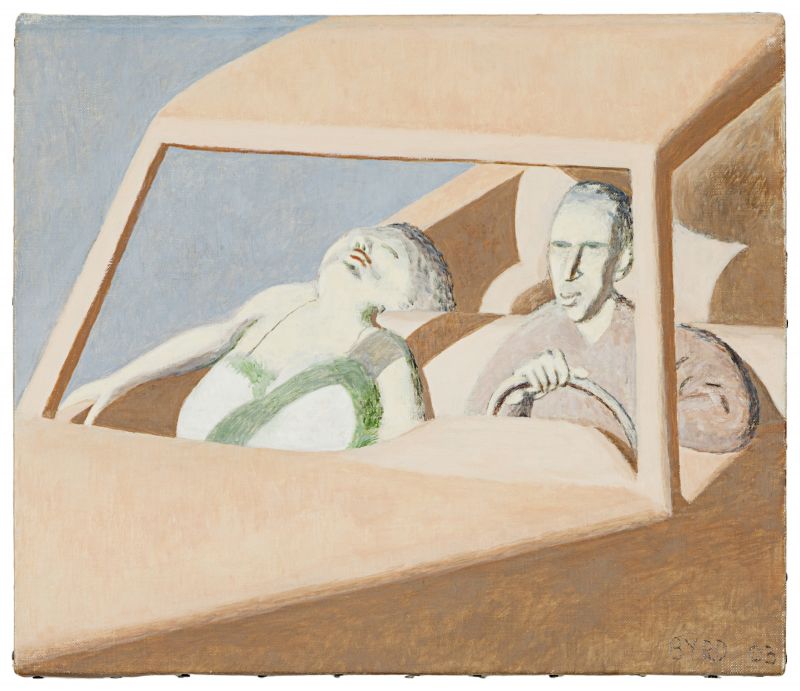
Byrd made self-portraits that pair him with a figure that contrasts with his depicted demeanor or temperament. In Agony and Aloofness (fig 9), Byrd and another figure sit at tables adjacent to one another, practically touching. His companion holds their head in their hands, palms pressed against their cheeks. Mouth open, eyebrows arched, eyes wide, hair red and flared as though on fire, they appear to be wailing. Byrd’s table is turned askew from his companion. He sits comfortably on a large green chair, his arms at rest on the table before him. Byrd wears a blue bucket-style hat, his eyes relaxed slits behind large glasses, mouth a calm short line, and shoulders relaxed. Everything about his body language contrasts containment against his companion’s distress. Is this a window into Byrd’s emotional management of the daily drama of a psychiatric ward? Does it reveal detachment from family trauma? Or is it an admission of his underlying emotional life, held at bay by the calm façade and the muted color of his art? A second paired self-portrait (fig. 10) shows him at the wheel of a car, closed off emotionally, looking intently ahead, while the woman next to him in the passenger seat slumps limply over the seatback. Has she passed out? Is she dead? What is represented here? Are these two aspects of Byrd projected into a painting – an emotional core spent and exhausted, unable to continue while the conscious self drives on? In each Byrd seems to explicitly show himself as detached in the presence of distress. His emotional defenses create a shell concealing what is below the surface.
Can we tell how Byrd felt about the patients that he spent so much time monitoring and sketching? Were they merely fascinating subject matter? Is it possible to find in his depictions, attitudes about mental health or about the level of care he observed? He once wrote, as though sympathizing with the patients, “It is partly about trying to hold on to some personality, some delusion some crooked individuality that an institution is taking away.”vii Byrd implies that, in the space between prison and hospital, the psychiatric ward served as a means to purge patients of their individuating character. Were his depictions of patients a way of preserving what seemed essentially true and uninhibited before being dissipated or controlled by medications? Byrd was ambivalent about its effectiveness. He witnessed the gamut of behavior and the treatment used to quell it. “Is locking up a person therapy?” he asked. “It can't be punishment though re[s]training. It seems to be a necessity under those conditions and resources. And isolating is needed in a locked room for ever[y]bod[y]’s safety and control at times.”viii
Byrd made quick onsite drawings that bristle with electricity, shading and contours executed while his subjects surrounded him. Little pieces of paper, scrap practically, helped him remember a gesture, an expression in the eyes, movement in the body he could not invent on his own. They carry the feeling of danger that witnessing patients’ altered states of consciousness brought. In these drawings one senses the urgency but also the tension of drawing on duty in a psychiatric ward. Some patients appear to block their faces as though refusing to be drawn or seen. Others are caught in mid gesture between mundane activities like eating, dressing or speaking, unaware that they are being drawn. Byrd valued the spontaneous feel of the drawings that he made, “From life but removed from life,” implying an inherent distance between him and the subjects.
While the drawings were immediate, the paintings are delayed by time, the images and experiences metabolized through Byrd’s body and turned out away from the ward. As he put it they are, “Inspired by life but not painted that way…The paintings are from observation where people did not know they were the subjects. If people know they are the subjects they tense up. Photographers know this well because they take pictures with indirect cameras to try and capture a less tense look. As soon as you say ‘Look,’ the subject changes.”ix Byrd paid attention to gestures of vulnerability, captured in his sketches and amplified in the paintings. He observed, “As women are always crossing their arms over their breasts and men are always protecting their genitals, some patients wrap themselves in arms and legs and seem to be always restraining their mind.”x
Byrd’s paintings show his keen understanding of body language and meaning, facial expressions and inner life. He saw signs on the body as evidence of a patient’s transformed internal perception and messages projected out into the world. For Byrd, disorders of the mind and consciousness were outwardly evident in the way a patient moved, shaped space, settled into tense configurations. His insight into feelings, not just emotional but physiological, show up in an ability to suggest the complex mix of internal conflicts happening in patient’s bodies. Byrd observed a patient who possessed, “A bizarre walk, unnatural and unbalanced that some mental patients have. Breathing thru his mouth while grimacing was risking choking when eating.”xi What is in the mind remains hidden from view but the outward effects on the body are visceral and mark difference. An entry from his VA Hospital book shows that Byrd understood this. He noted the case of a patient who, “lost and gained weight to extremes. Is large at times, happy then and abusive, later will be emaciated and depressed and unrecognizable.”xii While upsetting, this cycle must have fascinated Byrd, who spent so much time observing changes in patients.
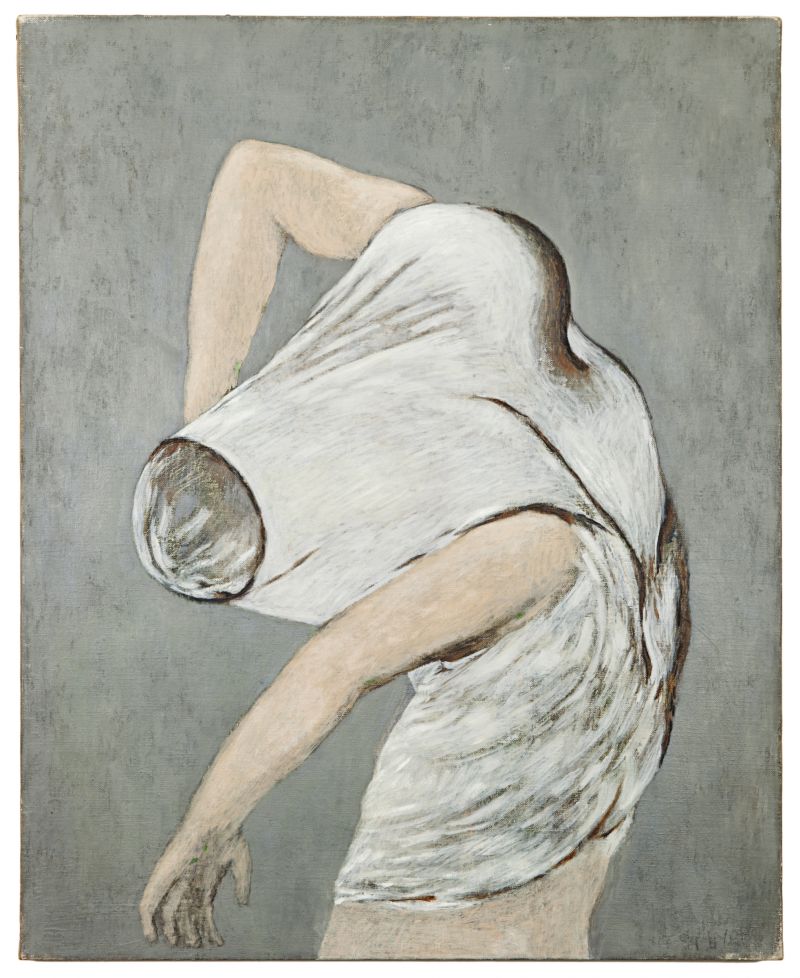
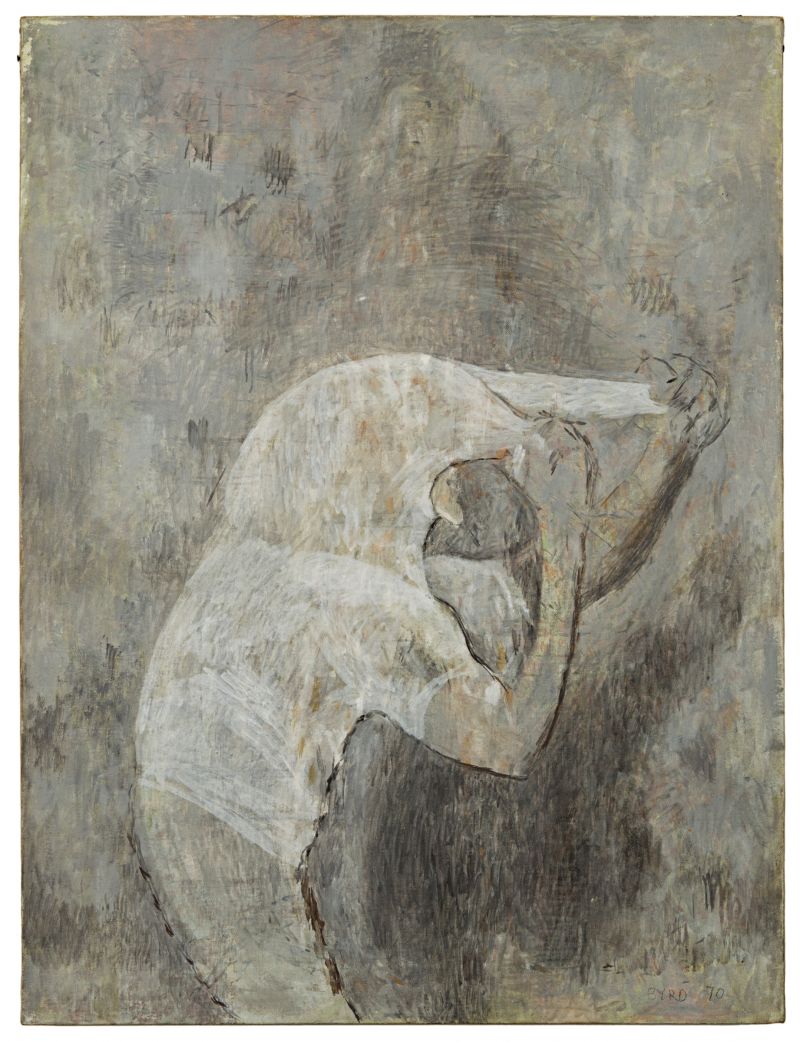
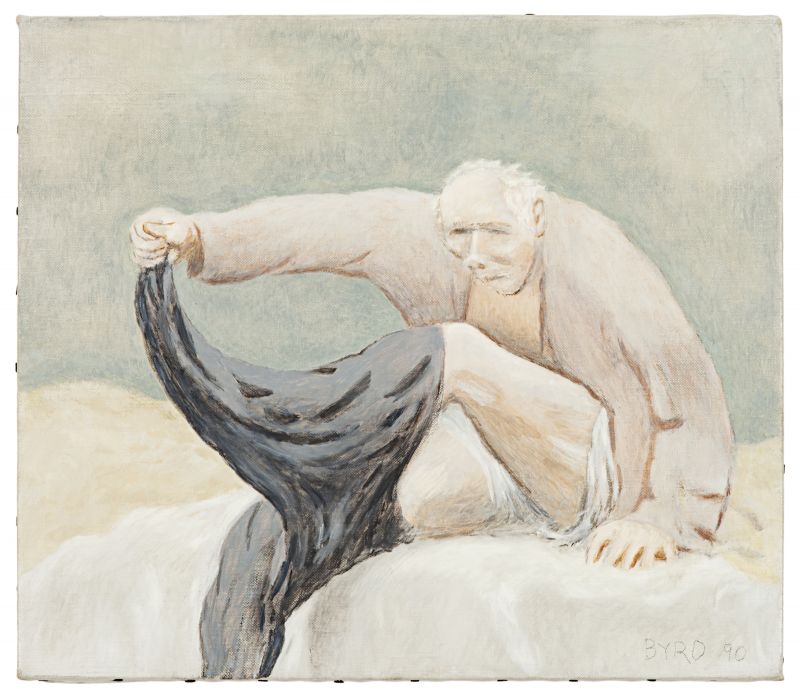
That feeling of perpetual concern, of the everyday bearing the weight of incident, saturates a group of paintings in which Byrd depicts routine tasks as fraught, startling, and on the edge of violence or self-harm. In images of patients undressing, daily necessity carries anxiety and threat. A shirt becomes a trap, disorienting its wearer in Man Undressing Shirt (fig.11). The figure’s monstrous appearance is due to Byrd depicting two moments simultaneously, the head at top, pressing from within and then at lower left, emerging through the neck hole as if it was a birth canal. A variation of this motif, Pulling (fig 12) calls to mind martyrial imagery of flaying, the skin being removed from the body. It also looks like it could be a protective covering, concealing and shielding. In another example, an older man sits on a bed and pulls upward on his left pant leg at the cuff (fig. 13) The black fabric has an abject viscous quality, suggesting the sensations that materials on skin might have under the pressure of psychiatric medication.
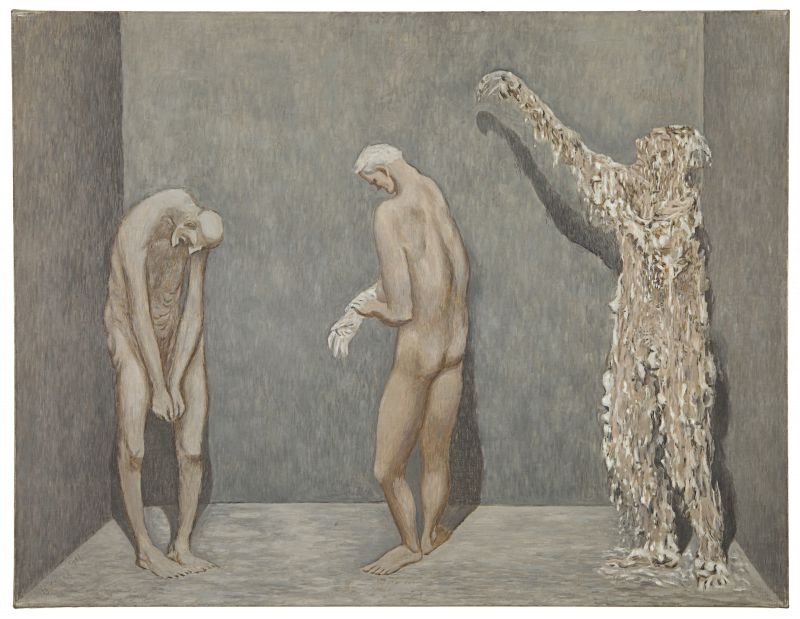
Byrd’s shower scenes are among his most startling and inventive. Startling because we return to consent (fig. 14). While we are unlikely to identify anyone shown, Byrd’s surveillance eye, as a figure of authority on the ward, reinforces the power imbalance between him and the patients. Artists have always sought ways of working from life. As a figure painter, Byrd seems to have been absorbed by the possibilities for depicting anatomy in many aspects of the hospital setting. Views of the patients showering – as if undressing for lights out was not enough – may show that everything on the ward became routine, the daily chores part of the background, so much that all felt fair game to his art. Perhaps Byrd devised the unsettling vision of a bather completely covered in soap to deflect a sense of violation and heighten the absurd. Here a man has become primordial creature, his underlying form a fluid ever-shifting transformation from second to second. Lather dripping and oozing, like a shed skin, a layer of crust to be removed so that he can refresh.
Throughout Byrd’s hospital paintings his design decisions help to reinforce a sense of patients contained, their illnesses held at bay, however extreme their bodies become. Men are in their own worlds. The space around them and Byrd’s muted palette isolates and suggests their distance from a reality outside the ward. It underscores their states of being. Byrd seems to be willing his design imagery to prevent illness from escaping, leaking out -- marking a boundary between him and them. Returning to Agonized (fig.4) shows this balance. The man’s distress is revealed in one of the most extreme poses that Byrd has captured. It is contained – held, even – safely in place through the staid geometry of the chair and solid block tones of the floor and wall. These anchors safely emphasize the elongation and unbearable bodily sensation as the limbs are pulled away from his torso as though tortured. While he feels too much and is seething, through Byrd’s design he is pinned like a specimen, removed and distant from us.
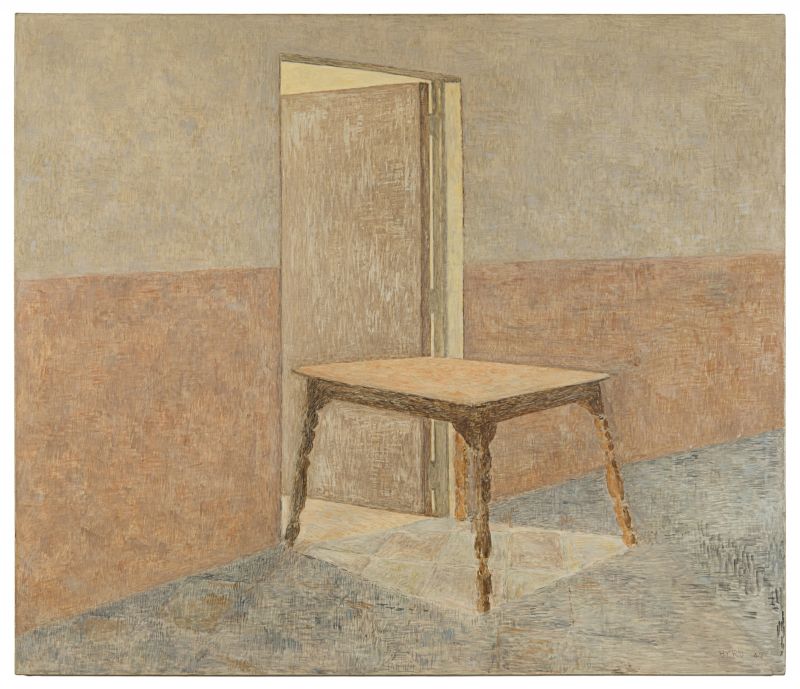
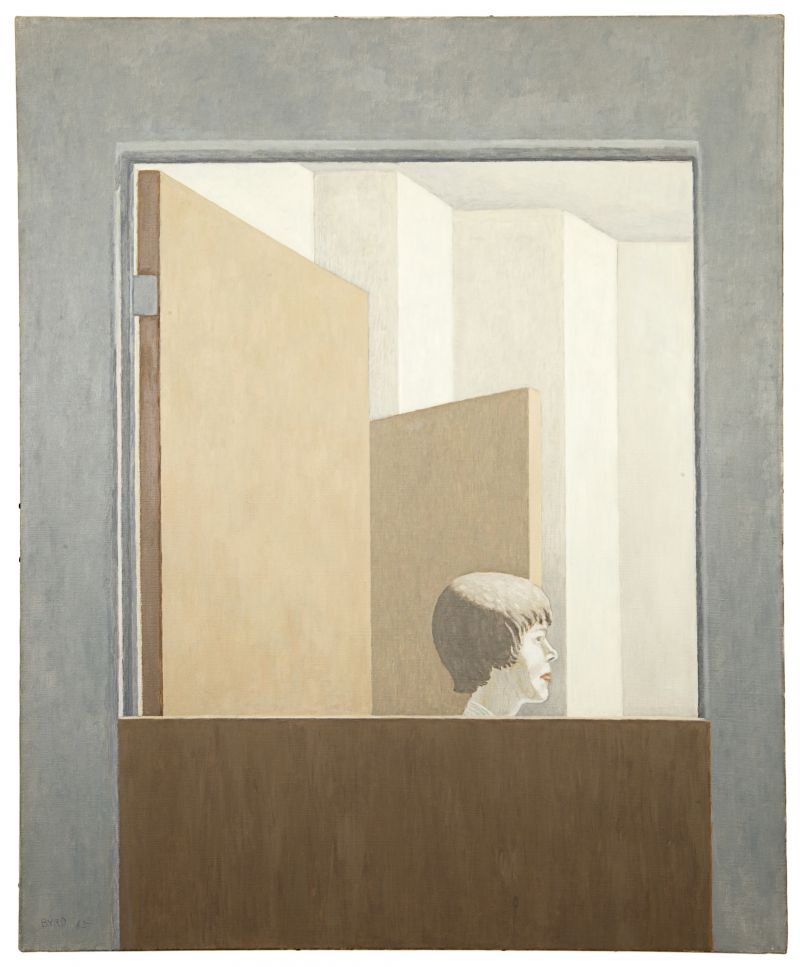
In other paintings, Byrd uses objects to obstruct and cause disconnection between spaces and potential escape routes. Table by Door for instance, seems to be a tangible manifestation of psychological challenges and interference (fig. 15). Beyond a straightforward still-life, it marks the threshold between a darkened room and an inaccessible space of light beyond. Half Door (fig. 16), which shows a nurse, glimpsed at a remove through a partial opening created for the benefit of patients, seems only to highlight separation between labelled health and disorder (fig. 16). Here, the void between care givers and the ill is not just represented through distance, scale, and the inaccessible aperture. It is, true to Byrd’s ingenuity, played out through a series of carefully choreographed and confusing rectangles and doors. They bar touch, sight, and might make calling for help futile.
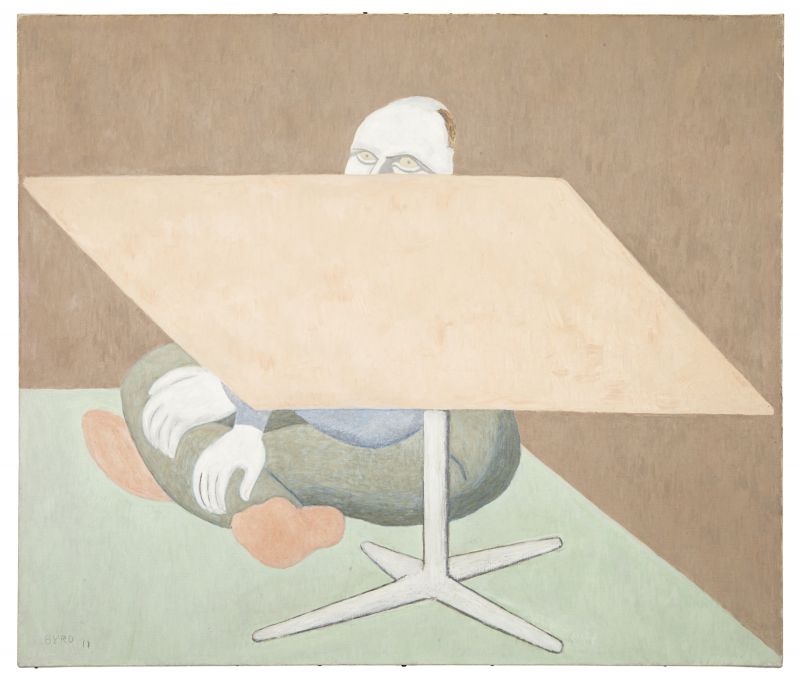
It is important to remember that Byrd worked at a hospital serving veterans. That context clarifies some of the more mysterious scenarios he depicts. It is likely that these are incidents recalled verbatim. They hint at the inner life of patients who are recovering from or living with PTSD from combat. Do works like Under Table (fig. 17) show a patient meditating or is he in an extreme regression through sensory hallucinations and flashbacks? We can surmise because of the context of the psychiatric ward that he feels the need, whether for safety or remembering, to sit between wall and table, partially concealed from view and sheltered from danger.
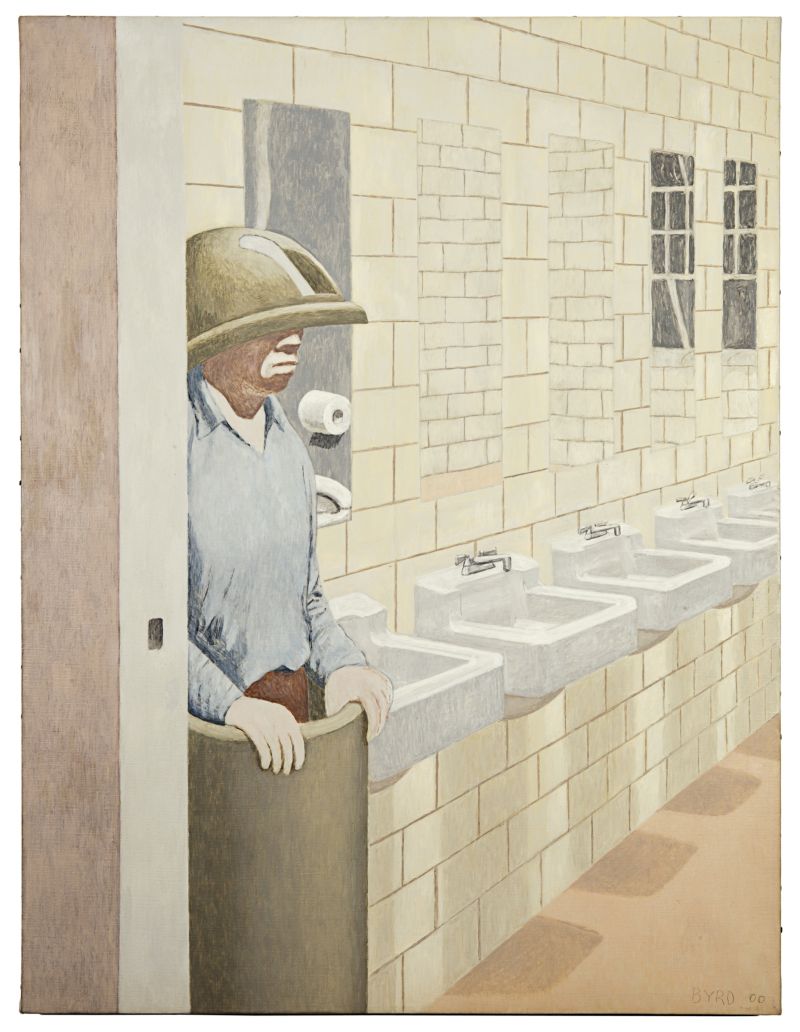
In Man in Garbage Can (fig. 18) a patient has retreated to the bathroom and has climbed into a trash can, placing the lid over his head like a helmet. Is he reliving war experience? What is playing through his mind so intensely that his body has moved into position as a sentinel to stand at the ready? What has happened to him to inspire this re-enactment? Byrd wrote about this incident, though not in detail, perhaps wary of revealing too much about the individual. He considered the situation absurdist, like a play, and mused, “When a person thinks he is garbage it is pathetic but depending on the person he can be hostile also. What is he going to do next? Some talking to and one hopes he will get out of the garbage can and go to bed.”xiii
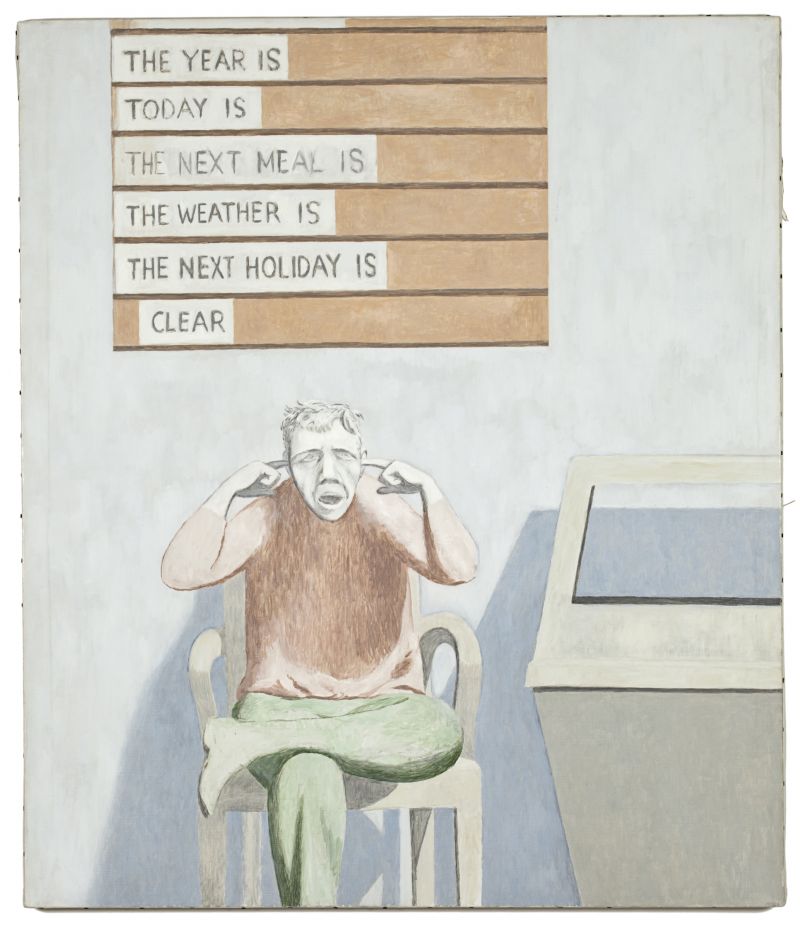
Patient Hearing Voices (fig. 19) places the afflicted in a chair, left leg crossed over the right, and fingers plugging up his ears. The man’s eyes turn downward to express sorrow, exhausted from torment, and his mouth opens in a moan. Above him on the wall a series of prompts meant to bring patients back to the present and ground them in the moment hang in the air without answers. The words are suspended above him as though mimicking auditory phantoms we have no access to. Byrd wrote about the experience of watching a patient experiencing such hauntings. “Visions. A little secretive grin, hallucinatory look in his eyes, apparently oblivious to his surrounding, lost in thought, saying nothing,” he observed. “Seemed to be always standing, one hand holding his trousers the other raised and bent toward his shoulder in some kind of semaphore. Standing still stopped everything for him.”xiv
The historian of medicine, Sander Gilman, has discussed how visual representations of so-called madness across cultures and time have settled into discrete icons that convey illness and disorder. This has often allowed society to mark the mentally ill visually through “physiognomy or body type, gesture or dress…Society, which defines itself as sane, must be able to localize and confine the mad, if only visually, in order to create a separation between the sane and insane.” The aim of the stereotype, according to Gilman, is immediate recognition of its meaning as a warning, a means to head off engagement. In fixing the look, “One does not have to wait for the insane to speak. The mad are instantly recognizable, and it is our need for instant awareness (which is often based on our construction of images of ‘madness’ rather than the illnesses themselves) which is the rationale for the visual stereotype of the insane.”xv
Gilman does not advocate for this attitude; he has identified its proliferation as a visual tradition that equates physiognomy and body language with a psychopathology. Such images play to a low common denominator and bigotry, flattening reality into an egregious symbol. Lived experience is much more complex. Byrd knew this, which is why he eagerly described the range of physical responses to distress that the patients on his ward experienced. He shows that every person living with illness has a specific response, due to their own specific trauma but also the introduction of medication into their bodies which changed their physiological responses to stimuli (within and without).
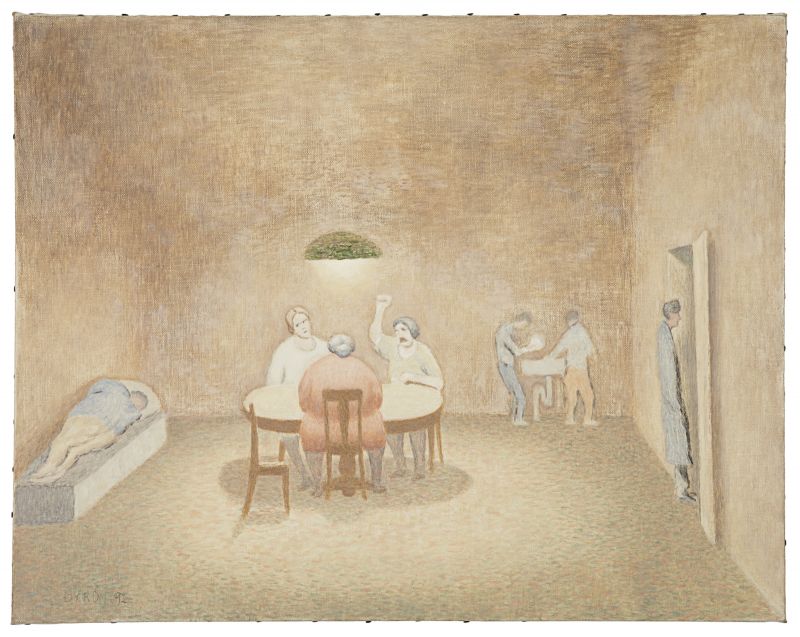
Observing human nature in a mental hospital affected the way Byrd constructed other imagery and permeated his genre scenes. For instance, Hell of an Evening (fig. 20) might as well take place on Byrd’s ward but it represents a family gathered after dinner. The cavernous undecorated room hosts a heated argument unraveling at the center table among three women. Two others wash up at a small sink, while a large man devoid of pants lies on a simple mattress facing the left wall. Another woman stands as though catatonic in a doorway.
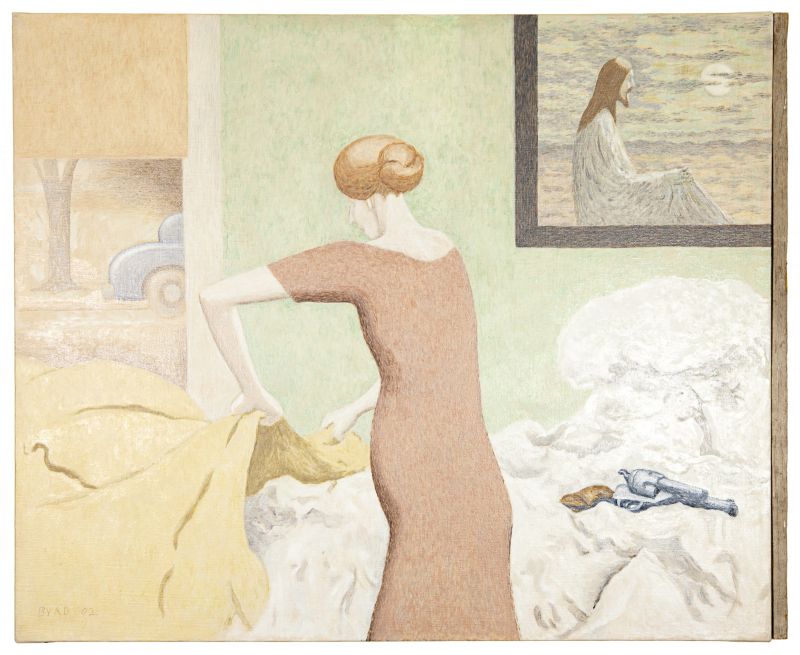
In Making Bed in Coal Country (fig. 21), Byrd’s eye for the startling and incongruous blends together to make a narrative worthy of a murder mystery or ballad. A woman appears to be taking the blankets and sheets off of a bed piled high with pillows and wrinkled bedclothes. As she goes about her work a revolver rests upon the bed to her right. Directly above it on the wall hangs a painting of Jesus in the garden of Gethsemane, where he was arrested before his Crucifixion. Is the woman removing evidence? Has she reason to be concerned that she will be arrested? What has happened here? Byrd lays down subtle clues and leaves the puzzle to be invented by the viewer.
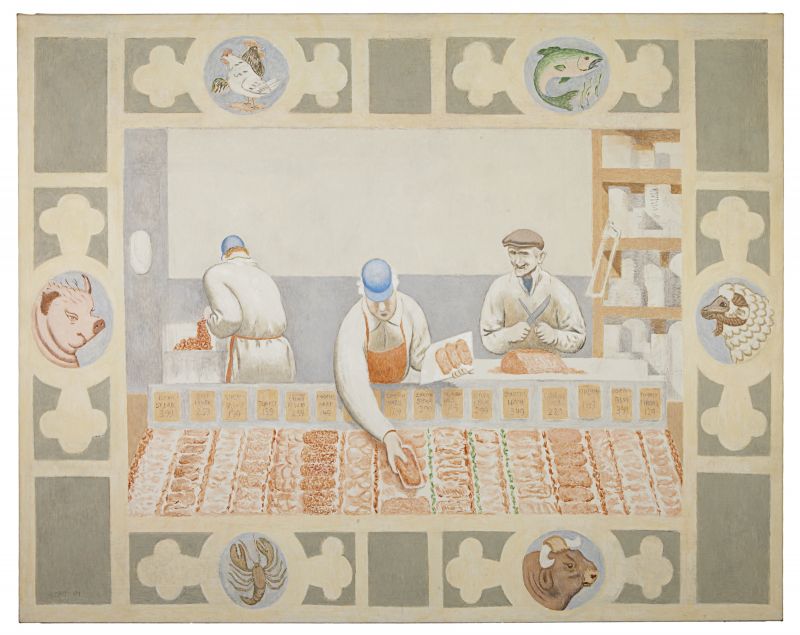
Byrd’s intuitiveness about body language and how people’s thoughts remain active and even frenzied below the surface colors much of his work. Perhaps that is what working among the mentally ill set into him, a sense of the hidden narrative, the alternate consciousness that runs parallel to what is made clear and obvious in everyday interactions. A painting such as Butcher Shop (fig. 22) also reveals what Byrd gained from looking at Flemish and Italian painting of the 15th-16th centuries. Designed to echo Christian martyrial imagery in illuminated manuscripts or fresco painting the image presents animals in roundels displayed in health and in life surrounding the result of their butchering. Throughout there are reminders of the instruments of their deaths and the grinding of the bodies into meat at back left. Their flesh is carefully, lovingly laid out for display and purchase to the rhythmic sharpening of a knife.
Depictions of people suffering from mental illness have appeared throughout history though they have often been exploitative or othering. Artists such as William Hogarth (1697-1764) and Francisco Goya (1746-1828) incorporated images of those afflicted with “madness” into moralizing visual parables. While these images may have served satirical or political ends, they did not dignify or respect people with mental illnesses. An early exception is Théodore Géricault (1791-1824), who broke with a spectacle-oriented visual tradition to make carefully observed, particularized portraits of people living with psychiatric issues. Étienne-Jean Georget (1795-1828), the chief physician at a psychiatric facility for women in Paris, commissioned Géricault to make portraits of men and women challenged with mental illnesses (1821-24). Géricault’s sensitive portraits align with Georget’s belief, new at the time, that “madness” was an illness that needed care and treatment rather than representing a manifestation of divine punishment. Although Georget and his colleagues problematically believed that a person’s physiognomy revealed their disability -- and likely considered Géricault’s skill in seeing helpful to illuminate this -- their approach represented a shift in the framework around mental health.
Two projects by Byrd’s contemporaries, Jacob Lawrence (1917-2000) and Mary Ellen Mark (1940-2015), also stand out for their insight and compassion. Together they appear to share common aims. Lawrence admitted himself into Hillside Hospital in Queens, New York in 1949 for treatment of depression. Over a period of eleven months, he was under the care of Dr. Emmanuel Klein and lived among other patients. Lawrence called the experience, “one of the most important periods on my life. It opened up a whole new avenue for me; it was…a very deep experience.”xvi
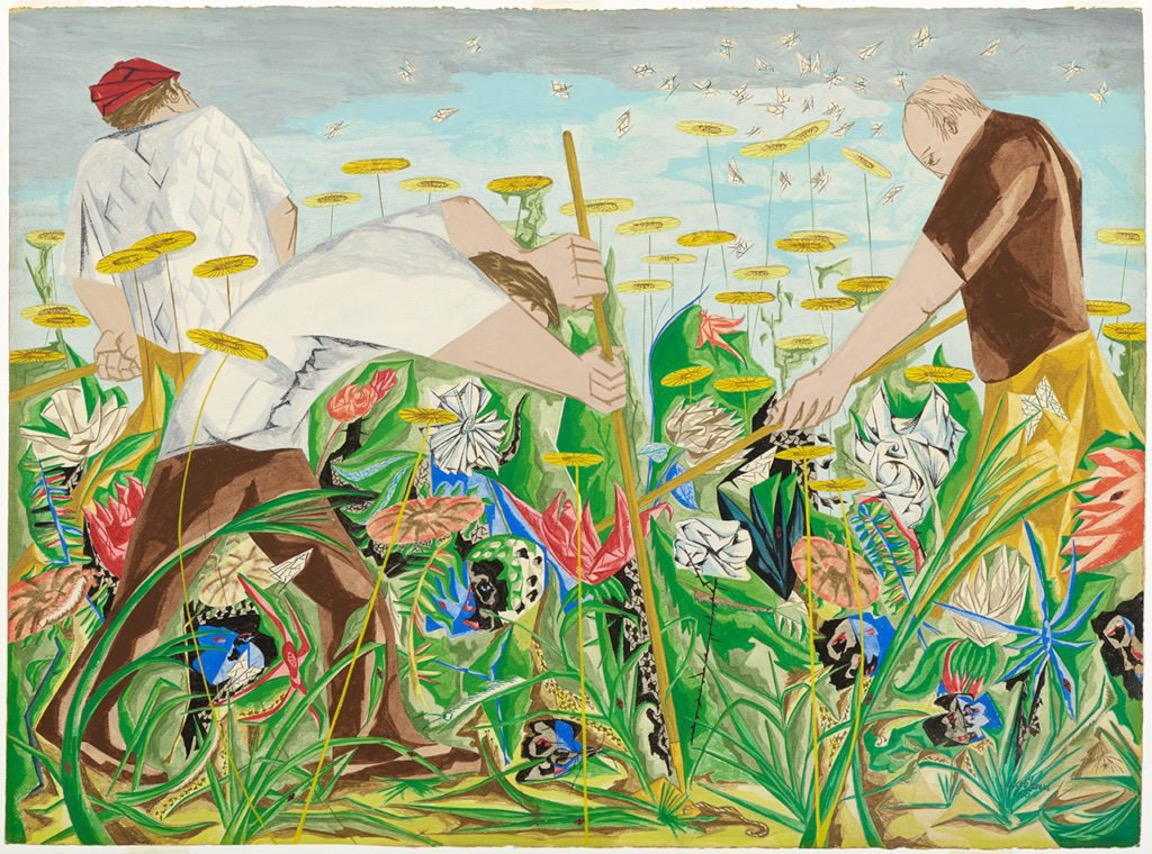
Figure 24, Jacob Lawrence: In the Garden, 1950, Pencil and casein tempera on paper, 22 3/16 x 30 1/16 in. (56.4 x 76.4 cm); North Carolina Museum of Art, gift of Drs. Roland and Elizabeth Kanof Levine in honor of John W. Coffey; © 2024 The Jacob and Gwendolyn Knight Lawrence Foundation, Seattle / Artists Rights Society (ARS), New York
During his hospital stay Lawrence made several casein paintings depicting the community of patients. The paintings show his fellow patients together, engaged in group activities, but rarely interacting. Lawrence was always a close chronicler of community and Hillside must have been fascinating to him. It represented a group of people brought together by circumstance united by their need for treatment by psychiatrists and doctors for underlying mental health issues. They faced this challenge together and worked to resolve their individual problems. In much of the work, even when patients are together, they are withdrawn and sedate (fig. 23). Lawrence’s paintings focus on their group activities such as sewing, knitting, cutting fabric, needlepoint, gardening (fig. 24), and other occupational therapies meant to facilitate healing.
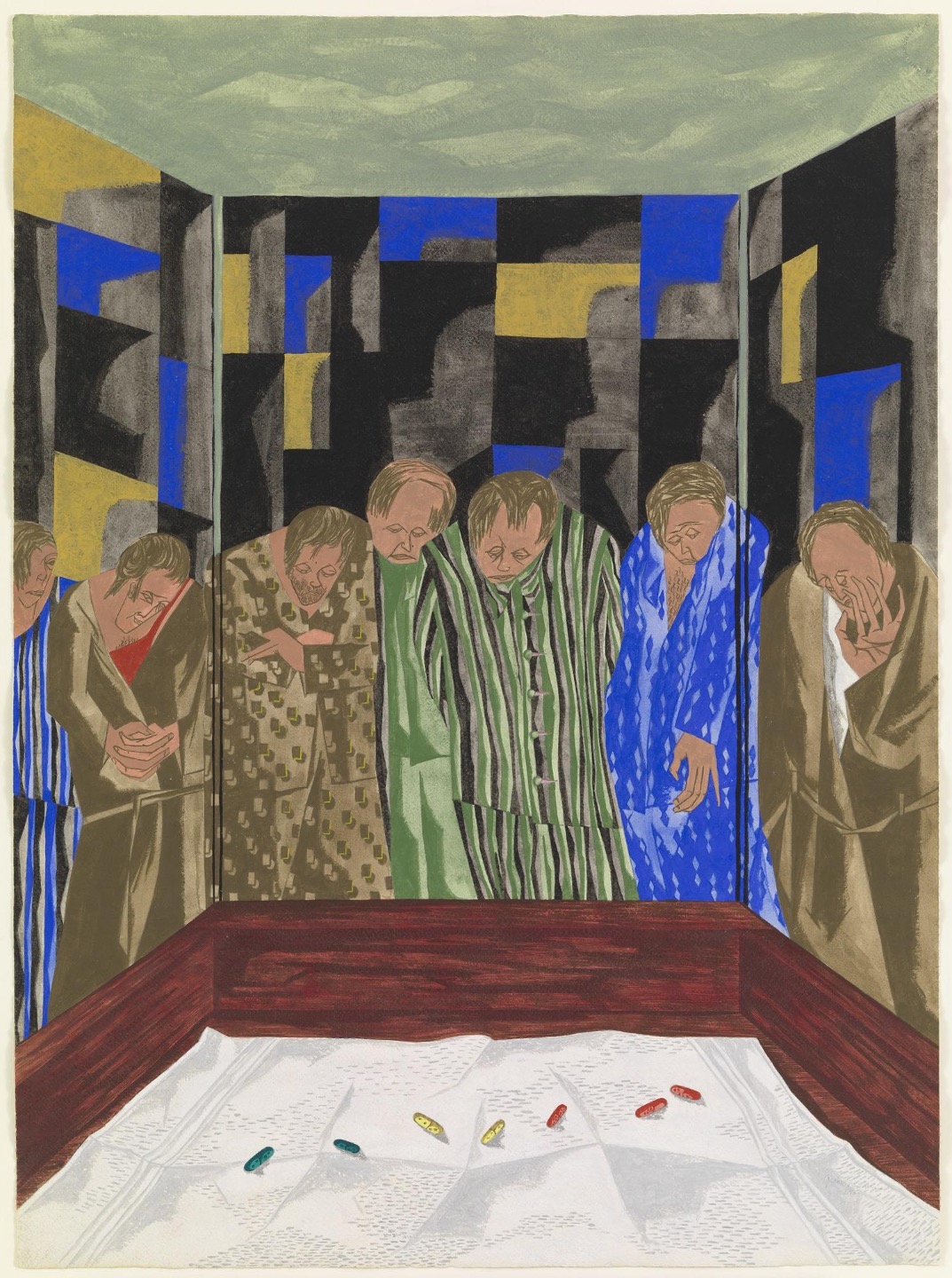
Figure 23, Jacob Lawrence: Sedation, 1950, gouache on paper, 30 7/8 x 22 3/4" (78.6 x 58 cm); The Museum of Modern Art, New York, gift of Mr. and Mrs. Hugo Kastor, 15.1951; © 2024 The Jacob and Gwendolyn Knight Lawrence Foundation, Seattle / Artists Rights Society (ARS), New York
An article in Ebony magazine published after Lawrence was discharged, describes him as mindful of Vincent Van Gogh’s (1853-1890), role as a predecessor who made paintings during mental health convalescence. Critics praised the resulting series of paintings as “emotionally richer, technically more advanced, and socially more significant than [his] previous work. The Hillside paintings are characterized by sharper presentation, keener insight, surer organization and a higher unity of substance and pattern…Dr. Emmanuel Klein, Lawrence’s doctor and friend, insists that the paintings cannot be credited to the painter’s illness.”xvii
Klein told a critic writing for the New York Times that Lawrence’s imagery did not “come from his temporary illness. As they always have – and as is true for most real artists – the paintings express the healthiest portion of his personality, the part that is in close touch both with the inner depths of his own feelings and with the outer world.”xviii Media coverage of Lawrence’s experience is remarkable for the time in its sympathetic and respectful tone. Critics wrote with admiration for Lawrence’s proactive attention to his own and others’ mental health. In analyzing the paintings, many connected attentive details of his figures’ body language to the artist’s compassion and quoted him saying he “felt it through the eyes.”xix
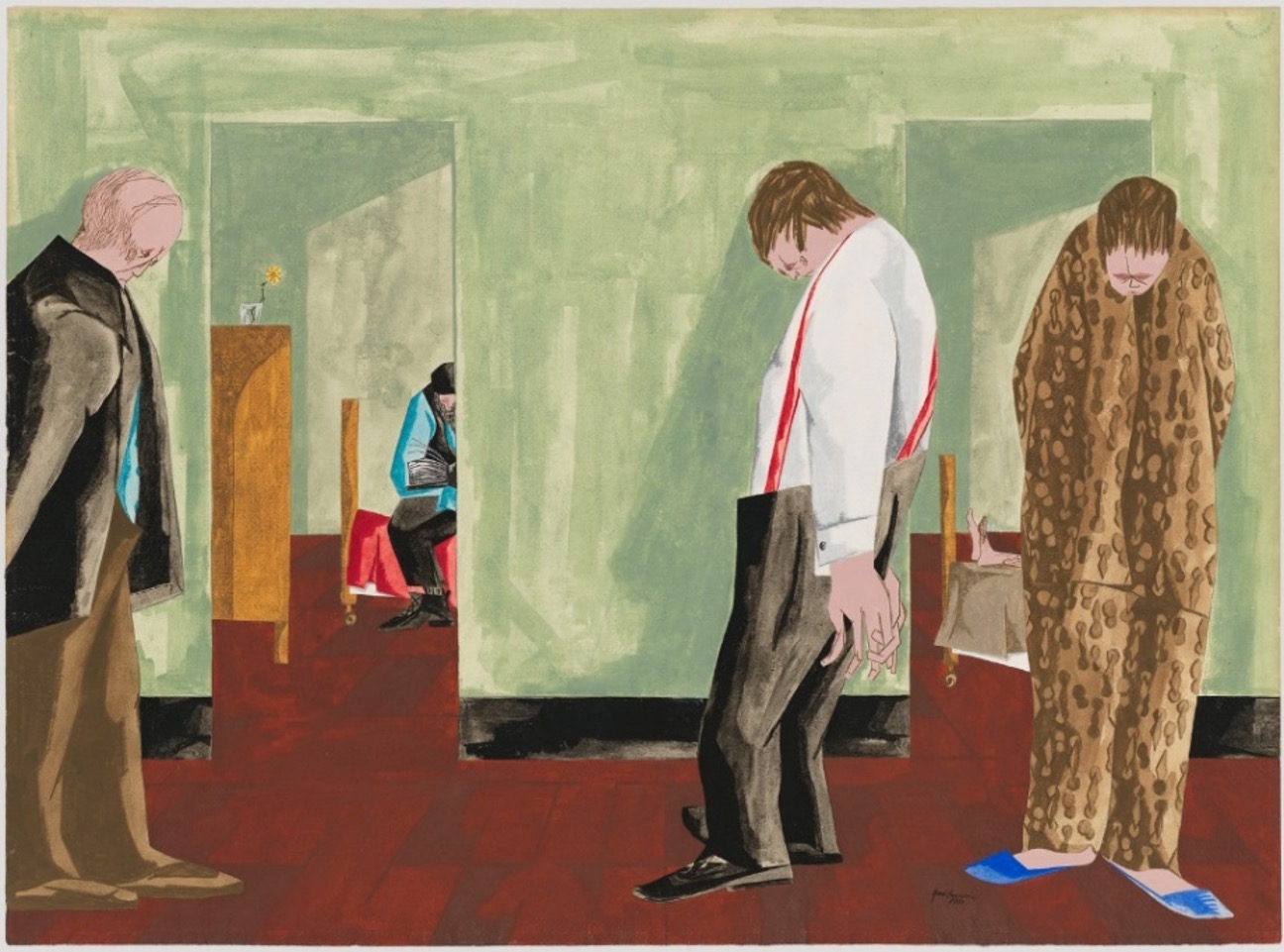
Figure 25, Jacob Lawrence: Depression, 1950, tempera and watercolor on paper, 22 3/4 × 31in. (57.8 × 78.7 cm); Whitney Museum of American Art, New York; gift of David M. Solinger, 66.98; © 2024 The Jacob and Gwendolyn Knight Lawrence Foundation, Seattle / Artists Rights Society (ARS), New York
Klein’s assertion that Lawrence’s work was not the result of his illness or that its emotional intelligence could not be attributed to his experience of illness denies the real effect that his affliction or the process of emerging from it had on his sense of self. Most often in art history, art of the “mentally ill” is treated as a separate category, kept apart from a broader analysis with the work of their contemporaries. The work of mainstream artists who lived with mental illness, such as Agnes Martin (1912-2004) or Sonja Sekula (1918-1963), is not discussed in relation to their afflictions. Art historian Jenny Anger has argued that to break the silence and continue to erode shame around mental illness, we need to consider mental illness’s effect on all artists who live with it.xx She asserts that a mental illness should be recognized as integral to readings of artists’ work since it connects with a sense of identity and changes their lived experience. Lawrence’s work at Hilllside therefore should not be seen as a blip or disconnected from the experience that led him there or the resulting struggle for recovery.
Mary Ellen Mark became interested in the subject of mental health residents at Oregon State Hospital during production of Milos Foreman’s film adaptation of One Flew Over the Cuckoo’s Nest (1975). Mark was photographing on set at the hospital and learned of its women’s ward. Her “Ward 81” project consists of photographs she took of women patients at Oregon State Hospital’s women’s ward in 1976 (fig. 26). She and writer Karen Folger Jacobs lived there for 36 days to develop the resulting book based on their experience. During the process Mark only photographed and recorded the women who wanted to participate. Each was invited to select names to protect their identities and share thoughts and feelings about hospitalization. Mark, whose own father had been institutionalized for nervous breakdowns, had consent for what she shows, but like Byrd’s paintings and sketches, the images startle (fig. 27).
In interviews about the project, Mark spoke about the way the word “madness” immediately others and makes outcasts of people. It carries old ingrained connotations that are extreme and imprecise. This and other terminology equated people with mental illness and criminals. She reflected that those afflicted deserve treatment. “They're sick, some of them. And it's very difficult to find what it is—it is different in everybody, and we all have touches of it. Which is one of the things that I wanted the pictures to say. But we control it, maybe, more, and we also have more masks to put over our faces. We're able to protect ourselves in ways that these women aren't."
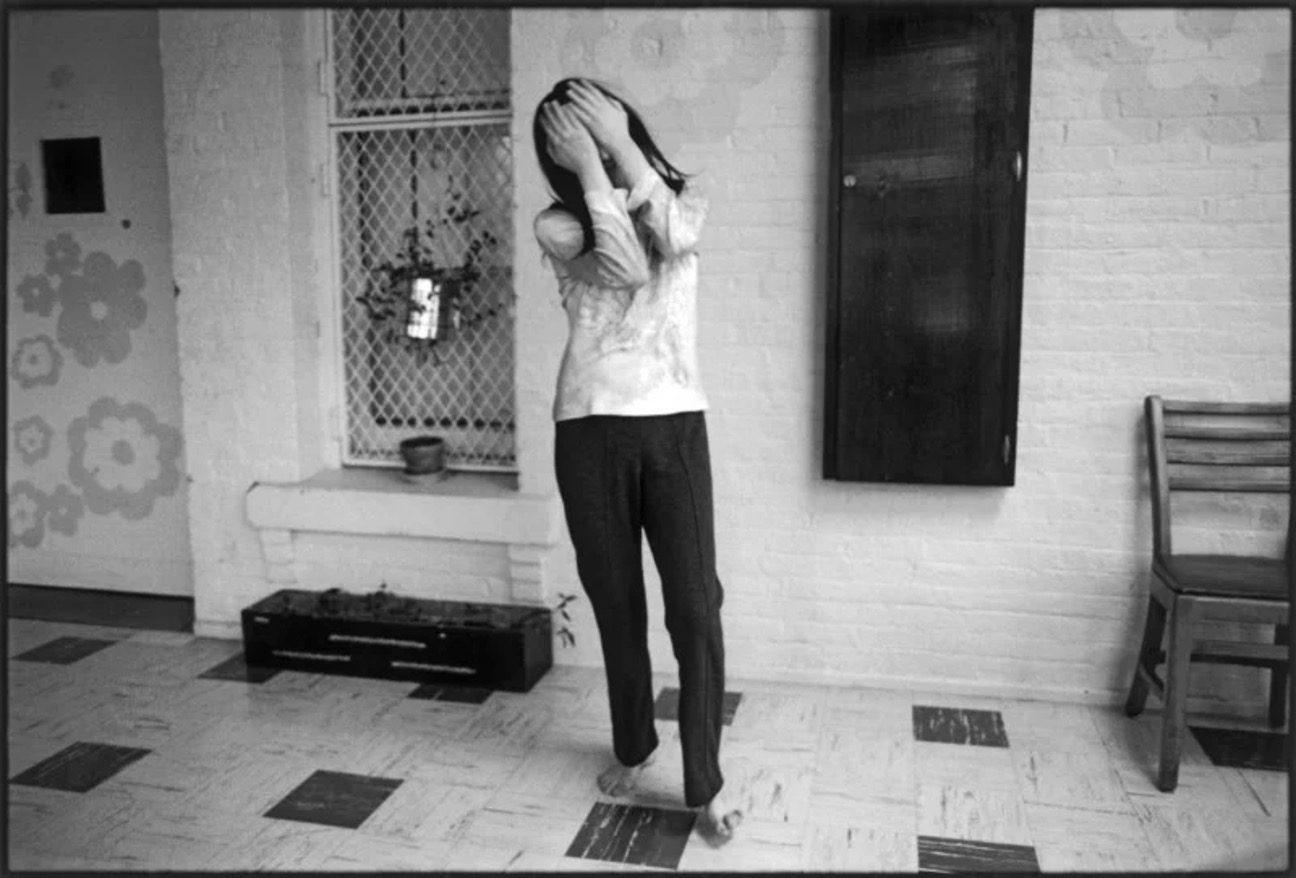
Figure 26, Mary Ellen Mark: Photograph, Ward 81, Oregon State Hospital, Salem, Oregon, 1976; 300B-018-024 © Estate of Mary Ellen Mark www.maryellenmark.com
Like Byrd’s concerns over perceptions of his intent, interviewers raised the issue of vulnerability for those who might be able to protect themselves. Mark replied, "I just tried by the way I approached it…not to be exploitative. I don't want to exploit people's misery. What this project means to me is, in a way, reaching inward and reaching outward…It's me reaching inward just to try and feel and touch these women. And them reaching outwards to try and tell the people that are going to see the pictures: 'Here I am.' And that's what I think a lot about when I photograph. It's not only me reaching inwards, but I think about the effect that that person is going to have."xxi
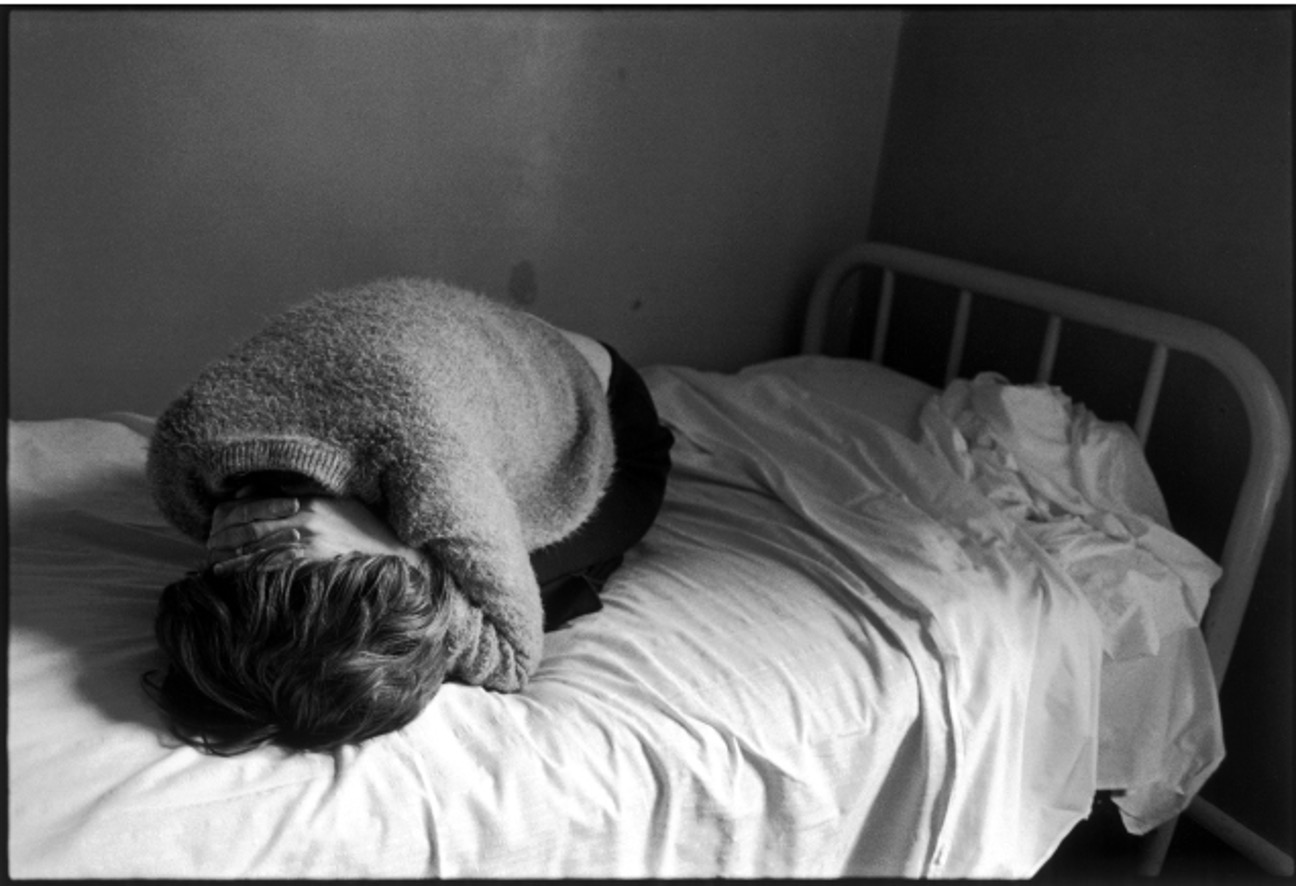
Figure 27, Mary Ellen Mark: Photograph, Ward 81, Oregon State Hospital, Salem, Oregon, 1976; 300B-027-030 © Estate of Mary Ellen Mark www.maryellenmark.com
While Mark and Lawrence made work under different circumstances than Byrd, there is a throughline in their attempts to make the nature of mental illness known and show what people go through as they try to heal. Lawrence was in treatment; Mark wanted to understand the women’s stories. Byrd had a more extensive engagement with the community of patients at the VA hospital where he worked, and he saw a lot. The resulting work seems to have been made with empathy and curiosity, even fascination with the nature of mental illnesses. There was no way he could avoid being immersed, based on his accounts. “You were kept busy but it was a boring job,” he reflected. However, he needed to be alert because of the nature of the environment. “You had to be careful,” he said. “Sometimes there was a new patient you had to get acquainted with, learn about. A patient could be dangerous or unpredictable. And so it went. I wondered if painting kept me from going crazy. I’m trying to figure out why I painted them. They were good subject matter and I think any artist would get something from that, as people are.”xxii
What did Byrd think about the treatment he watched over thirty years? What did he take away about the nature of the illnesses and hope for recovery? He sometimes found moments and incidents of connection that showed compassion in a place not known to be humane. He remembered a “nurse whispering to her old, bedridden, mute patient as she attended him that she loved him. Repeated it to each one on her medical ward.”xxiii Moments like this must have helped reinforce his own humanity and perhaps convinced him that these people he saw day after day deserved to be remembered or chronicled. What they make me ask and wonder about lies off screen, out of the picture. What is not shown? What is the bigger puzzle in which these pieces that Byrd made fit? How do they contribute to telling the fuller story of a life, of each anonymous person in his art? I wonder, where are their families? What are they going through? Will these men get better? Will they get out? Will they return? Who will care for them? Did war do this or did this lay dormant in them?
Ultimately Byrd seems to have been left wondering many of the same perpetual questions. “What is insanity?” he asked. “What causes it? Is it trauma, inherited? It seems to be an acute temporary or permanent sickness of the mind and emotions of hearing voices, seeing things, feeling objects not there, suicidal, incapacitating depression, doing criminal acts with no understanding, the list of uncontrol and unbalance goes on bit if one can mostly hold a job and raise a family that is about what sanity is. Just don’t fight everybody all the time including your self.”xxiv Maybe the calmness in Byrd’s self-portraits, mentioned earlier, represented his attempt to stave off the fight, maintain balance, hold off something within him that had been inherited that he hoped could be quelled through the act of painting.
Robert Cozzolino
Minneapolis, MN, April 2024
Robert Cozzolino is an independent curator based in Minneapolis. He curates collaboratively, in partnership with artists, colleagues, and broad communities. “Starting where you are” is critical to his practice—knowing the immediate context and deeper history of the place in which he works. He has curated over fifty exhibitions, including Supernatural America: The Paranormal in American Art, World War I and American Art, Peter Blume: Nature and Metamorphosis, David Lynch: The Unified Field, and The Female Gaze: Women Artists Making Their World.
Endnotes
- “David Byrd: Collected Letters and Writings,” edited by Jody Isaacson, Jessica Farrell, and Elzbieta Putrycz, p. 68.
- Ibid, p. 27
- David Byrd, Montrose VA 1958-1988 (Berlin: Hatje Cantz Verlag, 2020), n.p.
- “David Byrd: Collected Letters and Writings,” p. 27.
- Jody Isaacson interview with David Byrd, September 2012, unpublished typescript.
- “David Byrd: Collected Letters and Writings,” pp. 37-38.
- Ibid, p. 66.
- Ibid, p. 28.
- Jody Isaacson interview with David Byrd, typescript, September 2012.
- David Byrd, Montrose VA 1958-1988.
- Ibid.
- Ibid.
- Ibid.
- Ibid.
- Sander L. Gilman, Disease and Representation: Images of Illness from Madness to AIDS (Cornell University Press, 1988), 48.
- Robin Updike, “Jacob Lawrence and the Art of Observation,” The Seattle Times, July 2, 1998.
- "Jacob Lawrence: New Paintings Portraying Life in Insane Asylum Project Him into Top Ranks of U.S. Artists," Ebony (April 1951), p. 73.
- Aline B. Louchheim, “An Artist Reports on the Troubled Mind,” New York Times Magazine (October 15, 1950), p. 15.
- Ibid, p. 35.
- Jenny Anger, “Sonja Sekula and ‘Art of the Mentally Ill,’” American Art 35, 1 (Spring 2021), 94-113.
- Anthony A. Lyle, “The Women in Ward 81,” The Pennsylvania Gazette (March 1978). Mary Ellen Mark and Karen Folger Jacobs, Ward 81 (New York: Simon and Schuster, 1979).
- Laura Dannen, “At 87, Artist David Byrd is Just Getting Started,” Seattle Met April 2, 2013.
- David Byrd, Montrose VA 1958-1988.
- Ibid.